FISHING IN THE ATCHAFALAYA BASIN
Protecting the Atchafalaya Basin for Generations of Fishermen
Louisiana is known as the Sportsman’s Paradise, home to some of the nation’s most unique and productive waterways. From the bayous and backwaters of the Atchafalaya Basin to its rivers, lakes, and wetlands, these waters provide exceptional opportunities for anglers and support generations of fishing traditions. But these waters face growing threats from sedimentation and pollution associated with industrial and agricultural activities. Protecting the health of the Atchafalaya Basin is essential to maintaining its fisheries, wildlife, and the recreational opportunities that make this area so special.
Atchafalaya Basinkeeper works alongside state agencies, nonprofit organizations, local communities, and other partners to monitor and protect the Basin’s waterways. Through advocacy, education, and conservation efforts, we work to keep these waters healthy and accessible for the people and wildlife that depend on them.
Our goal is simple: to help ensure that future generations can fish the Atchafalaya Basin and experience the same remarkable waters that generations before them have enjoyed.
Fishing Advisory Map
Use the map below to find exactly where the advisories are issued in the Atchafalaya Basin.
How do our fish get contaminated?
Heavy metals like mercury or persistent chemicals such as PCBS enter our rivers, lakes, streams, and oceans from Industrial waste, agricultural runoff, and fossil fuel emissions. Tiny plants and plankton then absorb small amounts of these contaminants from their environment. Small aquatic animals consume these contaminated plants and plankton, accumulating the toxins in their bodies. As larger fish and other predators eat these smaller, contaminated organisms, the concentration of toxins increases in their tissues.
Over time, apex predators consume large quantities of smaller and mid-sized fish, causing mercury concentrations to build up throughout their lifespans. As a result, larger, longer-lived predatory fish generally have higher mercury concentrations than smaller fish. Smaller organisms tend to accumulate lower levels of methylmercury, making them generally less contaminated.
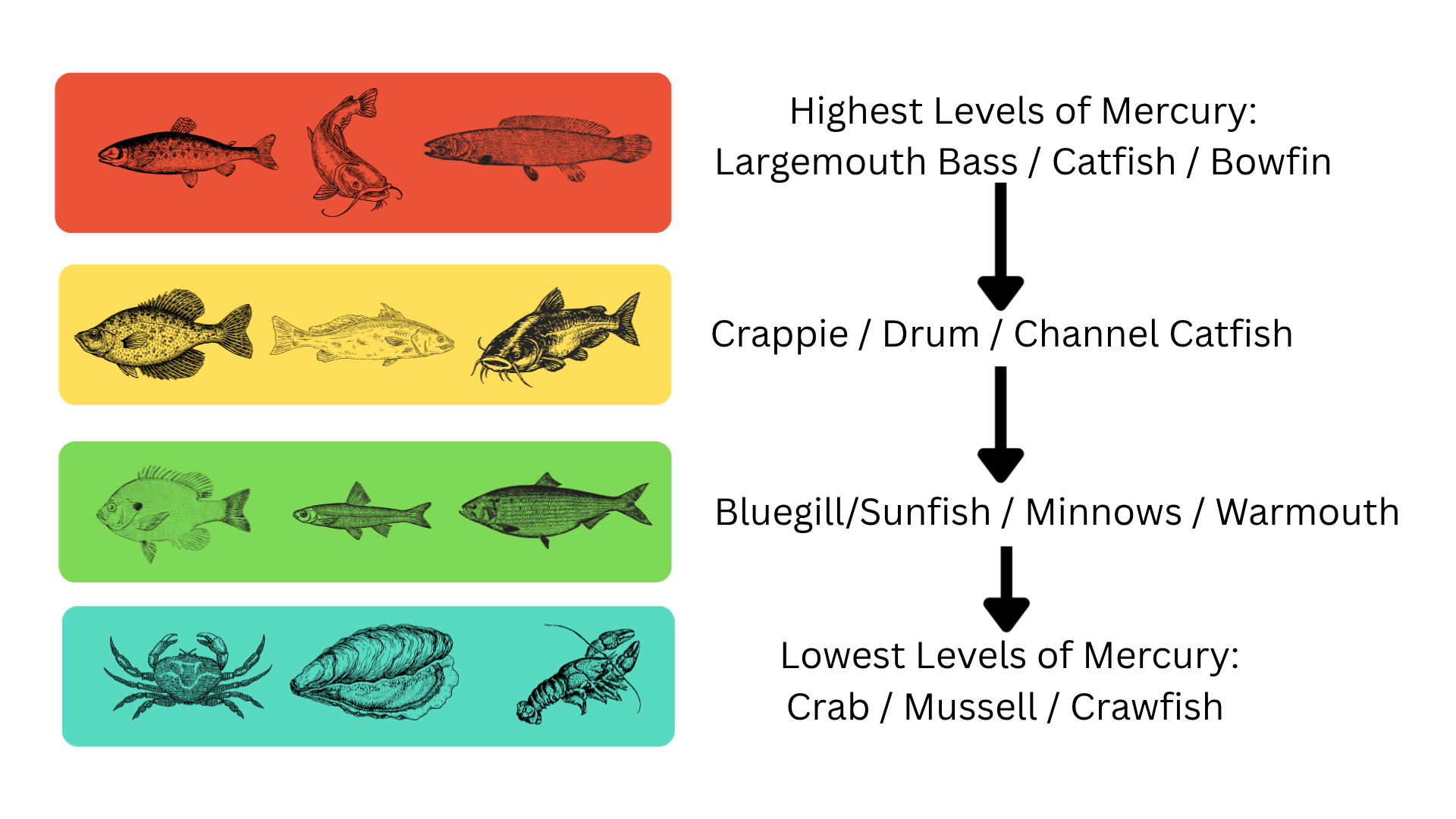
The largest predatory fish typically contain the highest levels of mercury due to a process called biomagnification as previously explained. These predatory species are often the target of recreational and commercial fishing.
The table below illustrates this relationship among fish species found in the Basin.
How do these pollutants affect us?
Mercury accumulation in the brain - nervous system
Eating Basin fish
Fish is an excellent source of nutrition, vitamins, and minerals. The goal is to pick well and the right amount, not give it up. Check out what kind of fish in the Basin best suit your nutritional needs!